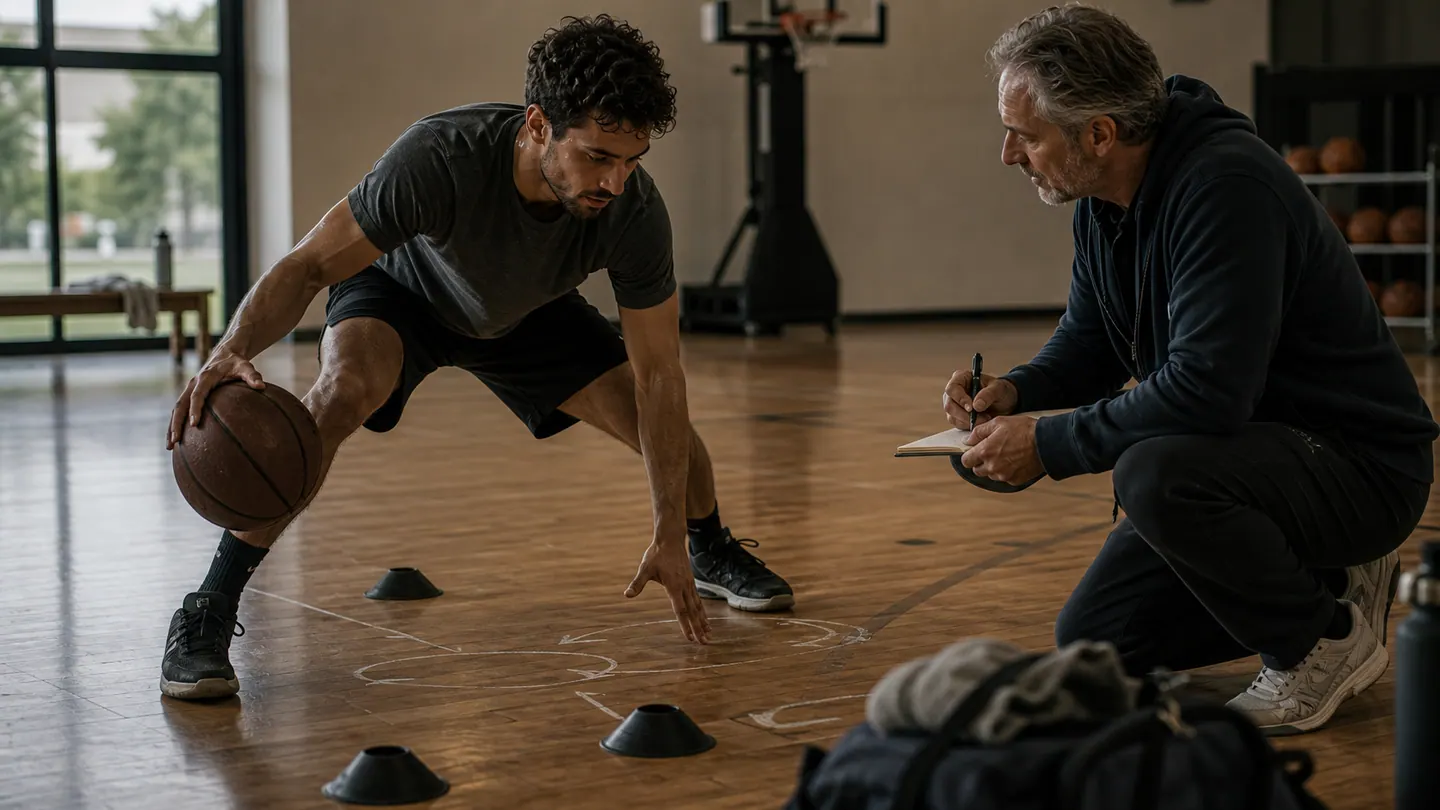
Deliberate practice is often presented as a heroic grind. That version is noisy, marketable, and frequently unhelpful. The practical version is quieter: choose a narrow part of a skill, attempt it with full attention, compare the result, correct one thing, and repeat.
It is not a promise of excellence. It is not a moral badge. It is a way to make effort more intelligent.
If you want the bigger map of how practice becomes ability, start with how skills really develop. The training session itself asks a narrower question: what to practice, how to notice, and how to avoid worshipping effort for its own sake.
Deliberate practice is narrower than hard work
Hard work can mean many things: time spent, energy spent, stress endured, volume produced. Deliberate practice asks a sharper question: what specific capability is being improved?
"Practice guitar" is broad. "Change cleanly between these two chords at a slow tempo" is deliberate.
"Write more" is broad. "Write five openings that create tension in the first paragraph" is deliberate.
"Get better at presentations" is broad. "Explain the core idea in ninety seconds without losing structure" is deliberate.
The narrower frame gives you something to observe. Without that, you may only be collecting hours.
Choose the bottleneck, not the comfortable part
Most people prefer the part of a skill that already feels fluent. That makes practice pleasant, but it can leave the real limitation untouched.
Look for the bottleneck:
- Where does the result repeatedly weaken?
- What do you avoid because it exposes you?
- What mistake appears even when you are trying?
- What part would make the whole performance better if it improved?
Then design the session around that point. A bottleneck is not an insult. It is the place where effort can finally become useful.
Work at a difficulty you can still read
Practice should challenge you, but it should not become noise. If the task is too easy, attention drifts. If it is far too hard, you cannot tell what went wrong.
Adjust one variable at a time:
- slow the tempo;
- reduce the scope;
- use a simpler example;
- shorten the session;
- remove one option;
- repeat under slightly harder conditions only after control improves.
This is close to the logic of flow: attention deepens when challenge is demanding enough to matter and clear enough to enter.
Feedback turns repetition into learning
Repetition without feedback can make bad habits smoother. Feedback does not have to come from a famous teacher. It can come from a coach, peer, recording, test result, customer response, rubric, or comparison with a strong example.
The useful feedback question is specific:
- What was unclear?
- Where did the rhythm break?
- Which step caused the error?
- What should I change on the next attempt?
Vague praise and vague criticism both have limited training value. Useful feedback should leave you with an action, not just a mood.
Keep sessions short enough to stay honest
Deliberate practice is attention-expensive. A shorter session with clear observation often beats a long session that turns into mechanical repetition.
A simple session can look like this:
- Name the sub-skill.
- Make a baseline attempt.
- Notice one mismatch.
- Change one variable.
- Repeat several times.
- Write one sentence about what changed.
The closing sentence matters. It prevents the session from disappearing into a vague feeling of effort.
Do not confuse suffering with seriousness
Some people use deliberate practice language to justify punishment. That is not maturity. If every session leaves you resentful, panicked, injured, or unable to return, the design is wrong.
Serious practice respects the instrument: body, attention, time, and emotional bandwidth. Recovery is not laziness. It is what makes another high-quality attempt possible.
This matters for learning, art, sport, leadership, writing, and any domain where the person doing the work is part of the system. Burned-out repetition is still repetition, but it may not be good training.
Combine practice with memory when needed
Some skills require durable knowledge as well as execution. A language learner needs vocabulary and conversation. A programmer needs concepts and debugging. A student needs recall and application.
Use active recall and spaced repetition for the knowledge that must be available later. Use deliberate practice for the performance that must improve through attempts.
Do not force one method to do every job. Memory, judgment, taste, and execution develop through related but different loops.
A four-session experiment
Choose one sub-skill this week.
Session one: make three attempts and record the recurring weakness.
Session two: practice only that weakness with the difficulty reduced.
Session three: get one piece of specific feedback or compare against a clear example.
Session four: repeat under slightly more realistic conditions and note what transferred.
At the end, ask a grounded question: what can I now do more reliably than before?
That is the anti-myth version of deliberate practice. It does not promise transformation by intensity. It helps you stop wasting effort on appearances and begin training the part of the skill that can actually change.